Interview series “Circular Economy”
Plastics are used everywhere. As a crude oil product, they are valuable because they consist of finite natural resources.


Interview series “Circular Economy”
Plastics are used everywhere. As a crude oil product, they are valuable because they consist of finite natural resources. However, the potential of plastics is by no means exhausted yet. This should and must be changed. The EU Commission has defined plastics as one of five key areas in its Circular Economy Action Plan. The plan is a commitment to preparing a strategy which is to approach the challenges of plastics over the entire value creation chain and the complete life cycle.
The companies that are organised in the VDMA Plastics and Rubber Machinery Association are following this path, too. With their commitment to the sustainability initiative Blue Competence, they stand for responsible and foresighted thinking and acting. They already today work on concepts on how they can play a part in circular economy. Within the scope of the plastics processing trade fair Fakuma, which takes place from 17-21 October in Friedrichshafen, the VDMA lets seven of these companies express their views in an interview series.
Ultra-pure recyclate almost has the same qualities as fresh plastic”
Today, injection moulding machines, besides recycled plastics, also process bioplastics.
Question: Are plastic recyclates already used as material in injection moulding machines?
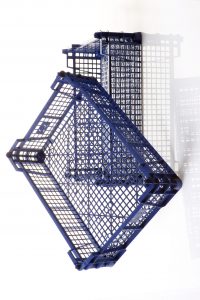
Georg Tinschert: They have been in widespread use for a long time already. And this should also be communicated. Since it is a point that helps to improve the image of plastics. We all have to point out more strongly that plastics can be reused multiple times, and, in fact, are being reused. Recycling three, four- or even five times is possible nowadays. We have customers who use up to 100 per cent recyclates for their applications. For example, transport boxes for vegetables are made of up to 100 per cent recyclates.
Are there special requirements for injection moulding machines that use recyclates?
Tinschert: You have to examine closely what the recyclate is made of. It can contain impurities which may harm the plastification system, for example, metallic matter, glass splinters or contaminants. You just need to be a little bit more careful. If a customer tells us which recyclate they want to use, we take this into consideration when we configure the injection unit. This may lead us to use more wear-resistant materials for cylinders and screws. We can also install a filter that prevents contaminants to enter the machine.
However, filters and adjustments cost money.
Related Posts
Tinschert: It can be costly if you indeed have to expect that the material used contains impurities. If the processor uses a well purified recyclate of high quality, however, this extra effort is unnecessary. Accordingly, it will not cause extra costs, but the price for the recyclate will be higher. You simply have to make sure that only pure recyclates will enter the injection moulding machine. This material will have similar processing qualities than fresh plastics. The same applies to the processing of gate systems. Many customers have tools with gate systems. With every cycle they create a certain amount of waste, which, however, is directly being ground at the machine and afterwards being added continuously to the injection moulding process.
Do you, as an injection moulding machinery manufacturer, have any influence on which material your customers use?
Tinschert: We do counselling interviews where we get to know which materials the customer wants to have processed by the machine. For the optimal configuration of the machine, our know-how is needed. If the customer does not have a specification for the material about the amount of recyclate that can be added, we can suggest, for example, that for certain applications or process technologies, like the sandwich technology, instead of 100 per cent fresh plastic you can also use a certain amount of recyclate. This way, you can reduce material costs because recyclates are cheaper than virgin material.
Are customers open to the idea or are they mainly worried about production safety?
Tinschert: We have made the experience that our customers are very open-minded about this topic. You just have to realise that the material costs make up for the biggest part of production costs in injection moulding. On average, 60 per cent of the costs are allotted to the material. Recycled plastic, even if it has been recycled with a lot of effort and accordingly is more expensive than plastic recycled with less effort, is still cheaper than virgin material. Its use also makes sense from an economic perspective. To ensure the production safety, a consistent quality of the recyclate needs to be maintained and the qualities of the parts may not be reduced or influenced by the recyclate.
Are bioplastics also already playing a role in injection moulding?
Tinschert: Definitely. You can injection-mould bio-based as well as bio-degradable plastics. Bioplastics can be recycled technologically in a way that they come very close to standard plastics on oil basis. That they are currently not used very often has very likely something to do with the comparatively high price. We observe that bioplastics are often used where an ecological awareness is present. For example, regarding children’s toys. Many parents link buying toys made of bioplastics to a commitment to sustainability. Also with regards to packaging, this material is trending. Apart from the ecological effect, this helps to improve the image of plastics in the customers’ eyes. Sometimes you have to accept with some bio packaging that a film is not completely transparent or that it is totally smooth to the touch. However, knowing about a bioplastic simply improves the entire image of plastics on the consumer-side.
Could the new EU roadmap to circular economy also lead to an image improvement?
Tinschert: The roadmap certainly is an important contribution to the image improvement. Big changes that concern the usage or consumption behaviour of people often have to be initiated by legal requirements. When politics set circular economy as an important strategic goal for the future, the respective formalities have to be established to ascertain their implementation. We could observe this with light bulbs, which were substituted by energy saving lamps. Nobody would have done it voluntarily, or only very slowly. If you want to push something like this, you must set up rules. To only believe in the good will of people, does not lead to success. Formalities that apply to a large economic region also have the advantage that they are neutral in terms of effect on the competition. You cannot produce cheaper in one country, just because you do not have to adhere to certain regulations.