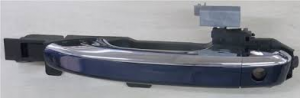
Teijin Develops Formable Gasoline-resistant Bioplastic Film for Vehicle Door Handles Integrated with Smart-entry SystemsTeijin Develops Formable Gasoline-resistant Bioplastic Film for Vehicle Door Handles Integrated with Smart-entry Systems
Teijin Limited announced today that it has developed a formable gasoline-resistant film made of PLANEXT® bioplastic to replace chrome plating, which Honda Lock Mfg. Co., Ltd. has now adopted for nonconductive door handles integrated with smart-entry systemsTeijin Limited announced today that it has developed a formable gasoline-resistant film made of PLANEXT bioplastic to replace chrome plating, which Honda Lock Mfg. Co., Ltd. has now adopted for nonconductive door handles integrated with smart-entry systems


Teijin Limited announced today that it has developed a formable gasoline-resistant film made of PLANEXT bioplastic to replace chrome plating, which Honda Lock Mfg. Co., Ltd. has now adopted for nonconductive door handles integrated with smart-entry systems. Teijin developed the innovative film using a special metal-evaporation technology from a processing-manufacturer partner. Teijin is currently developing other automotive applications in addition to mass producing the film for door handles.
This new film is made with PLANEXT SN4600, an improved grade of Teijin’s PLANEXT bioplastic, which is made from a bio-origin chemical compound called isosorbide. In addition to original PLANEXT properties such as chemical resistance, transparency and surface hardness, polymer reforming is used to give PLANEXT SN4600 important new properties including gasoline resistance, formability, UV resistance.
Related Posts
Teijin’s gasoline-resistant film is ideal for vehicle doors, which of course have the possibility of coming into contact with gasoline. Optimized heat resistance and filming technology enable high formability for fashioning into complicated shapes. UV protection helps to shield the base material and prevent discoloration.
Vehicle door handles are increasingly being integrated with secure smart-entry systems that enable doors to be locked and unlocked by simply placing one’s hand on a handle sensor. The material surrounding the sensor, however, must be nonconductive to avoid sensor malfunctions, so conventional door handles made of electroconductive chrome plating coated on a resin base are not suitable. Plastic films made with a metal-evaporation process are nonconductive and already being used as metal substitutes for automotive exteriors, but they are not suitable for door handles because they are neither gasoline resistant nor highly formable.